This article decribes a feed forward amplifier concept from Giovanni Stochino. The design, while novel, is very complicated and delivers about 30 dB in distortion reduction. Stochino Feed Forward.pdf
For an altogether simpler alternative that acheives about 20 dB distortion reduction, take a look at AFEC (‘augmented feedback error correction’) elswhere on this site.
The famous Quad 405 ‘Current Dumping’ amplifier was launched in the mid 1970’s, and featured feed forward error correction that effectively removed the class B cross over distortion that plagues this type of output circuit structure. The design featured no adjustments in production, but the circuit components around the output (L2, R36, R38) had to be accurately matched to achieve the specified performance. The design caused quite a stir in the audio industry at the time, and was the subject of a patent and a paper at an AES convention a year earlier. Although the 0.005% midband distortion placed it firmly in the upper eschelons of measured performance in the industry at the time, some reviewers failed to warm to the sound. Nevertheless, this was a landmark design that creatively solved the cross over distortion problem. Quad_405_Power_Amplifier_Wireless World Article.pdf
Power Amplifiers, and especially bipolar output designs, require output stage protection in the event of a fault, or the presence of a heavy or highly reactive load.
Michael Kiwanuka explains the intricacies and the design methodology for output stage SOA protection :-
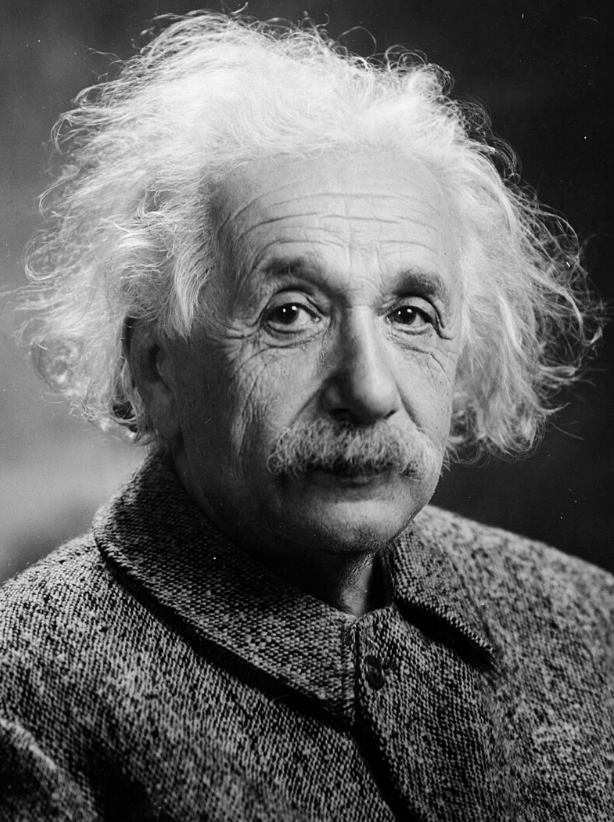
This presentation by Jurgen Renn charts Einstein’s journey from his 1905 ‘annus mirabilis’ (‘miracle year’) when he was still a lowly unknown patent clerk in the Swiss Patent Office. Just ten years later in 1915, with the publication of General Relativity, he emerged as the undisputed giant of 20th-century physics. The presentation focuses on the insights Einstein gained from his thought experiments and his interactions with fellow physicists and mathematicians at the time. Einsten was hugely influenced by people like James Clerk Maxwell, the Scottish physcist who unified light and electromagnetism, and Ernst Mach, the German philosopher and mathematician, who famously questioned Newton’s ideas of absolute time, amongst others. Marcel Grossman, who mentored Einstein’s early mathematical efforts in General Relativity in the ‘Zurich notebook’, exposed Einstein to some of the mathematical tools that would be needed to formulate General Relativity. Foremost amongst these was the Ricci tensor developed by Italian mathemeticians Gregorio Ricci-Curbastro in 1887–1896, and subsequently popularized in a paper written with his pupil Tullio Levi-Civita in 1900. This work was in turn based on earlier work by German mathematics giant, Bernhardt Reimann.