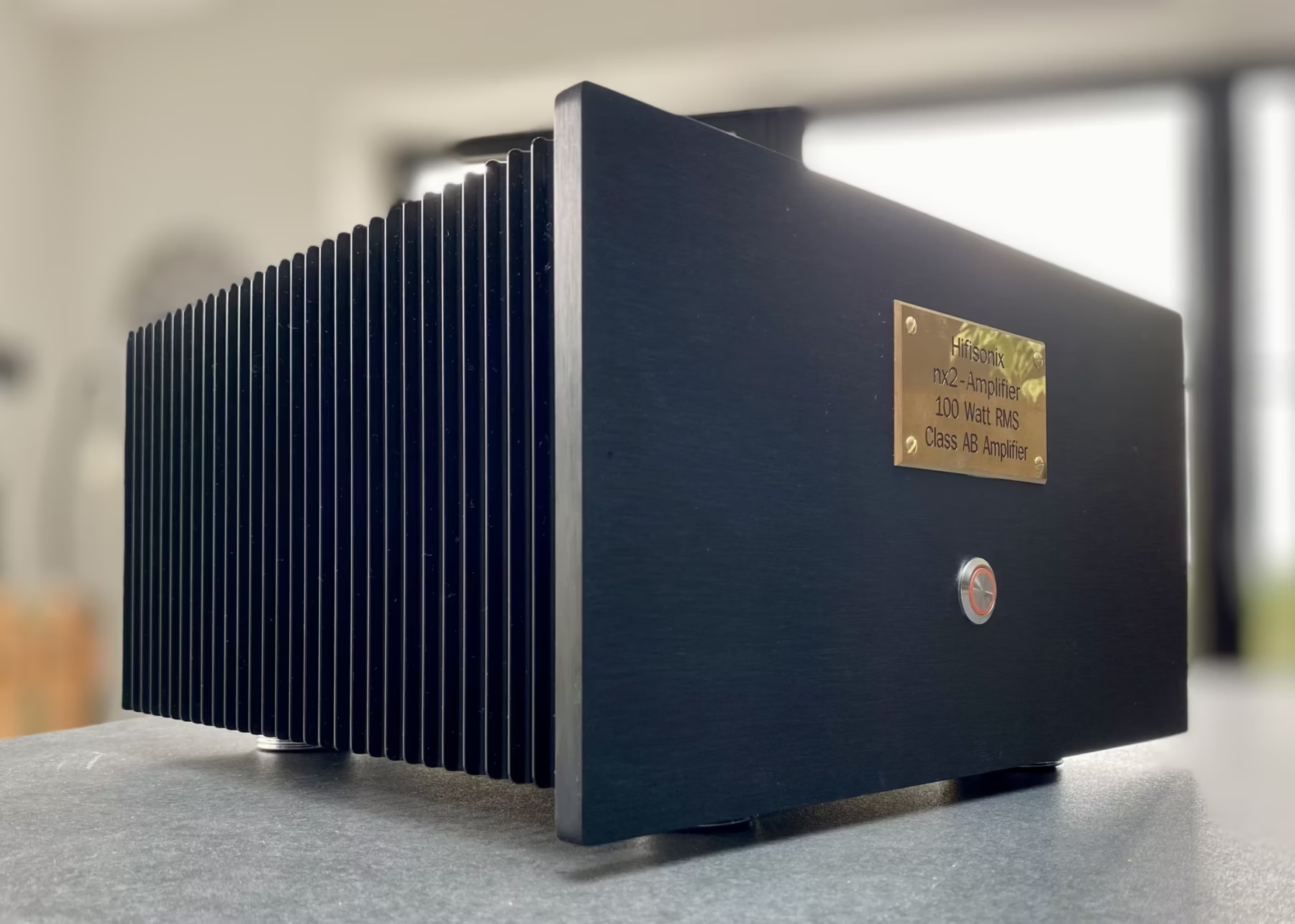
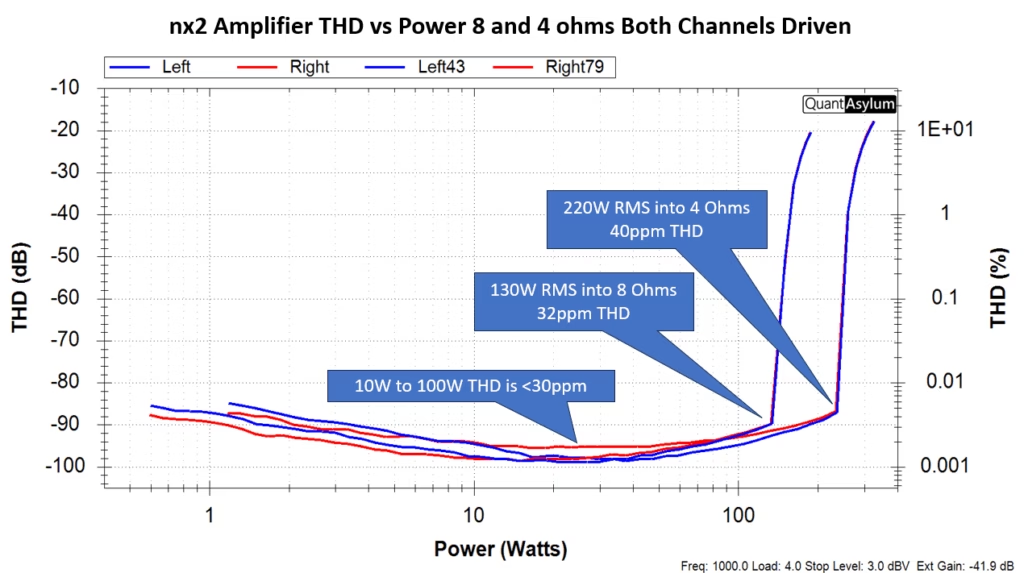
The nx2 produces >100W into 8 ohms and >200W into 4 Ohms both channels driven. At 100W into 8 ohms, the measured distortion is below 30ppm while at 200W, it is below 40ppm. The amplifier features 700ns rise/fall times and an EF2 output stage using three pairs of output devices, allowing it to drive difficult loads. It uses SMD devices for much of the small signal part of the amplifier, which ensures it is future proof, given that many TO-92 devices are no longer readily available.
Click here to buy 2 off high quality nx2-Amplifier PCBs
Click here to buy a PSU+Inrush controller PCB
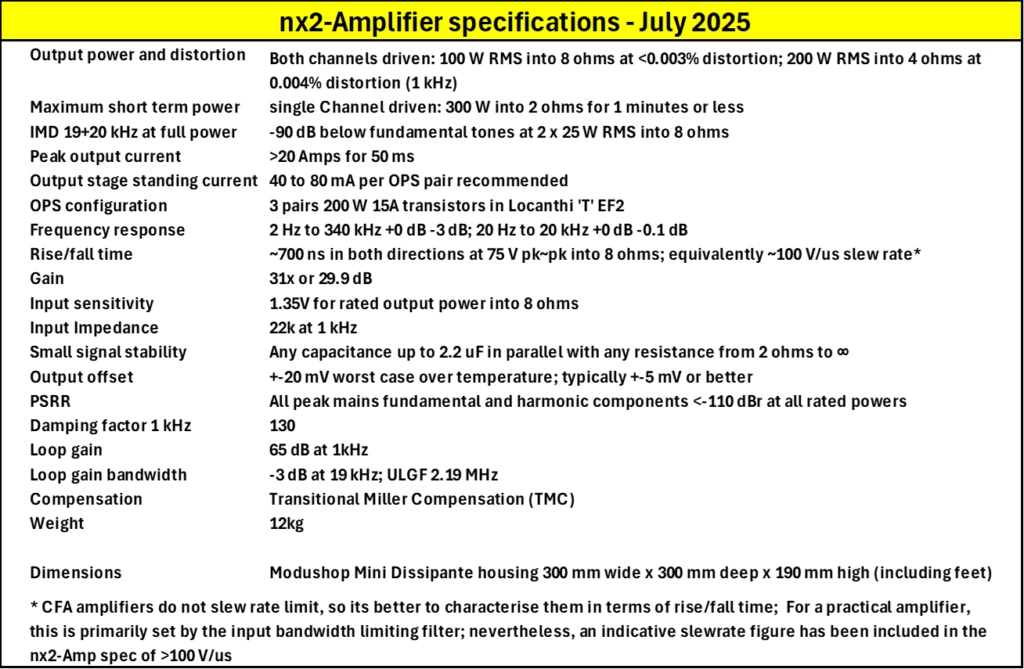
Click here to download the full build document with circuit description and measurements
Click here If you’d prefer to have me build you a nx2-Amplifier exactly like the one pictured above but with the rear plate silkscreened, for £1699-00.
I used a Modushop Mini Dissipante chassis (Part# 1MNPDA04/33/300N) for my build. Gianluca at Modushop can drill and mill the heatsinks and rear panel to the Hifisonix Universal Chassis spec. Just send him the linked to zip file when you order your chassis. Note, the Hifisonix Universal Chassis drill spec will also cater for the sx, kx2 and original nx amplifiers.
If you have any questions, let me know, and thanks for visiting hifisonix.com. As always, I am here to help with any technical issues.
nx2-Amplifier: Some Background
In 2012, shortly after I published the sx-Amplifier, a very simple pared-down class A CFA, I tweaked the design to come up with the nx-Amplifier that delivered 100 Watts RMS into an 8 Ohm load and simulated at 0.007% distortion at 80 Watts RMS. Like the sx-Amp it was based on, the idea was to keep the amplifier simple, and easy to build but still have good overall results and sound. The transimpedance stage (aka VAS) was a simple single transistor implementation preceded by a standard CFA diamond buffer input stage, while the OPS was an EF2. Two iterations of the nx-Amp board were made – the initial release in 2012 and then a further small update in 2016. About 150 sets of each release were sold through Jim’s Audio and from what I can tell, most of those were built.
Accompanying the amplifier boards was a rather complex and unwieldy power supply and protection board that I called the ‘PSU +Prot’ that offered +-50V DC rails, DC offset and overload current protection, and power ON/OFF speaker muting. The Zobel network for the amplifier modules was, unusually and not very cleverly, incorporated onto the PSU +Prot Board. I received lots of excellent feedback about the sound which builders loved. However, in retrospect, I think some aspects of the design were idiosyncratic as described in the presentation.
Fast forward 13 years to 2025, I’ve learned a lot, had much feedback, and so it is time for an upgrade . . . this can be approached in two ways: start with a blank sheet of paper and a brand-new design or start with what is a good basic amplifier and improve it, ending up with something altogether better than the original. I decided on the latter course of action, adhering to the ‘if it ain’t broke, don’t fix it, just upgrade it’ dictum.
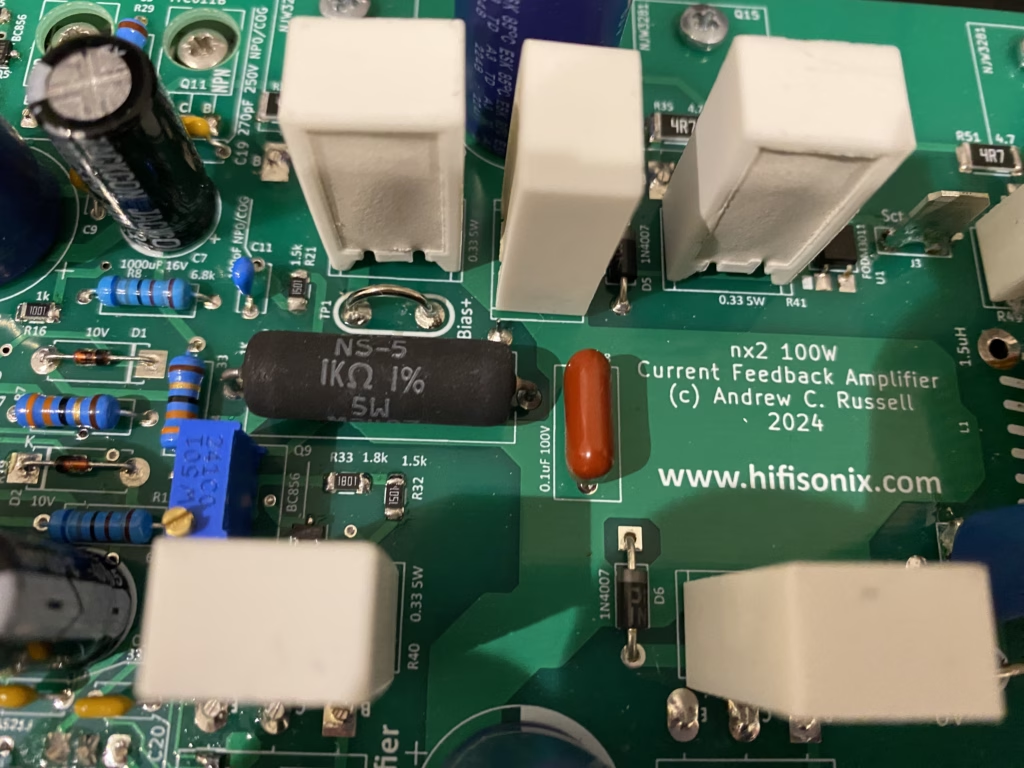
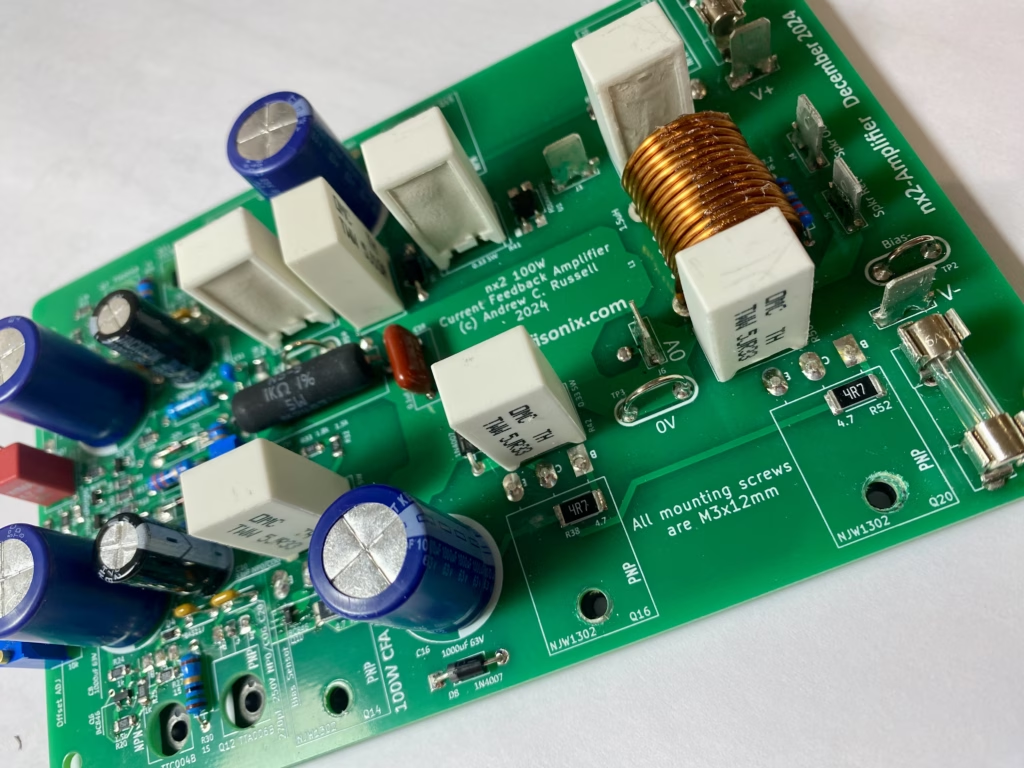
How does it sound? Big punchy bass with a lush, detailed midrange and what I’d describe as a delicate, open top end. I use my nx2 with my B&W 703s to listen to jazz and classical music, but it also pairs fantastically with the KEF LS50s that feature even better coherence in the top two octaves of the audio band. Outstanding imaging is an absolute requirement for me, and the nx2 complements good recordings in this aspect wonderfully in my view, where a lesser amp might fail by closing in the sound stage. The bottom end is particularly good, and I put that down to the triple EF2 output stage and the increased loop gain (about 12 dB), allowing it to deliver high LF currents accurately. I have written elsewhere about the fact that current feedback amplifiers cannot slew rate limit, and this is evidenced, in amongst other things, with exceptionally low IMD (19+20kHz) at full power, which is responsible for the very delicate, open top end on this amplifier – a characteristic the 15W RMS output class A kx2 also shares by the way.
You could argue that, as the designer and builder of the nx2, my vision is clouded by my attachment to the nx2 and the CFA topology. You of course are entitled to make that observation. However, I have heard a lot of outstanding amplifiers (and some not so good ones) over the last 50 years or so, and my contention is the nx2 is an outstanding amplifier that I would quite happily put up against any other. The nx2 incorporates all of the latest thinking in linear power amplifier design with regard to PCB layout and compensation, and coupled with modern, high-performance semiconductors, means legacy amplifiers of similar power ratings aren’t much of a match for it. If you want to enjoy is at its full potential as a high-end amp, be sure to marry it to a good power supply – don’t skimp on this and also make sure it has adequate heatsinking.
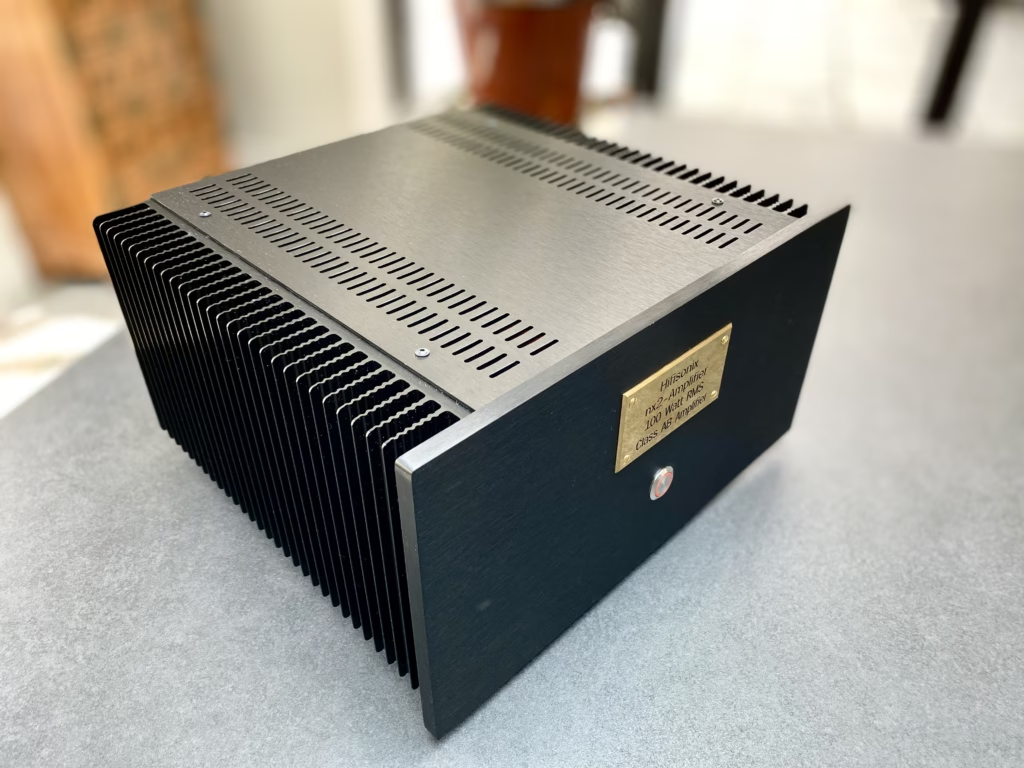
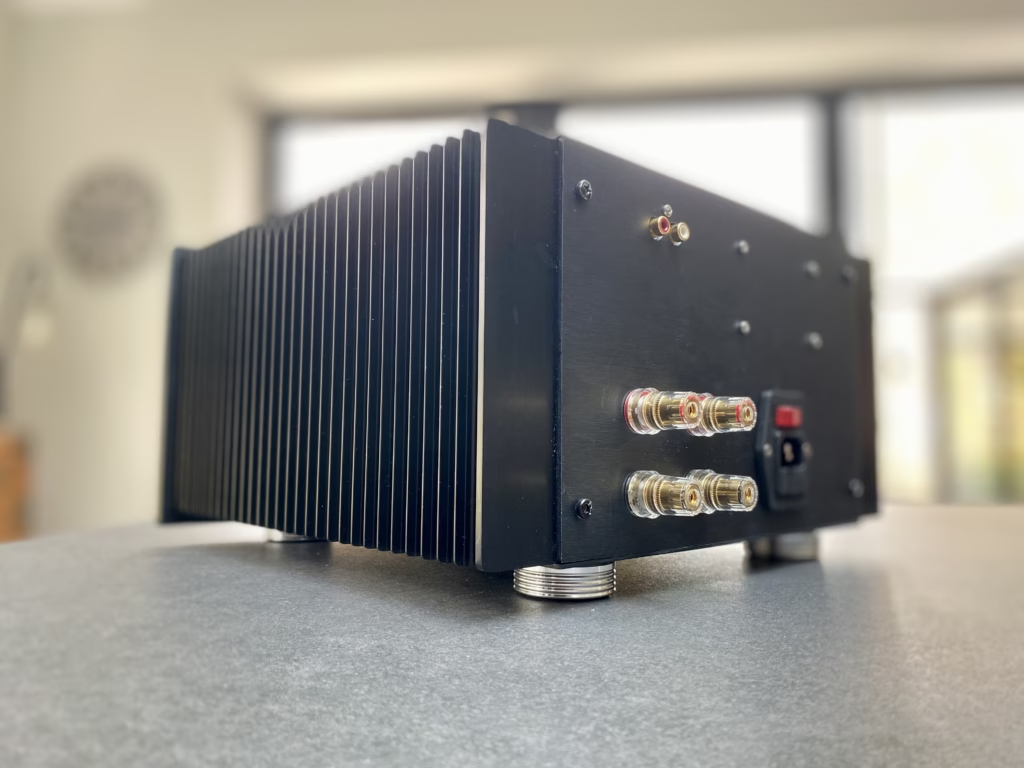
Vojin and his friend Dule, both from Serbia, each built nx2-Amplifiers recently. Vojin built one of the original nx-
Amplifiers a few years ago, a precursor design dating back to 2012, and was very pleased with the sound of the original. However, both he and Dule found the nx2-Amp (which Vojin calls the ‘Temptation’) a big step up. Here’s Vojin’s review and some words about his system as well:
Let’s begin by quoting the old report:
The other night we gathered at Dule’s place for premiere of his nx2. His system is: an old CD player with
surprisingly good sound, Technics SL15 turntable with excellent arm and cartridge, DIY tube line preamp
based on E80CC, Lundahl trafos on the output, DIY tube phono/RIAA stage, DIY two way speakers with
French Triangle drivers in D’Appolito fashion. His power amps were kx2 (sold) and a big Perreaux with
curved facia. Now it is time for nx2.
His build is, as usual, impeccable. Looks impressive, restrained, very nice. If you don’t have the pics, or if
they are bad quality, I can tell Dule to make new photos. It gets hot, though with his specific heatsinks,
but we don’t worry about that.
And the sound? I can say, and the other audiophile guest agreed, that this is the best sounding system
I heard in Dule’s place. With Perreaux it was bland in comparison; now the sound is alive and involving.
Bass is articulated and precise, mids are realistic, highs sparkling. Dynamics excellent. Space rendering
we couldn’t check properly. No listening fatigue. We enjoyed the whole evening. The only objection I
may have would be that the performance reminds me of my ‘old’ nx. Wait for AB test once I finish my
bulid, hopefully in a few weeks.
As I am writing this I am listening to The Shadows, pure joy
End of quote.
The above was written on 17-11-25. Now, 26-12, let’s move to my own Temptation. Also refer to my
‘new vs old’ message of 17-12.
To answer your queistion: I run bias at 37-38mV at test points. That is approx ¾ of what you prescribe.
My poor man’s flat cooling plates can not stand full 50mV, everything gets uncomfortably hot.
Considering that measured avg. SPL in my room is usually less than 80dB at 2.5m distance and my
Avalons are some 86dB/W/m with 4R imped. I reckon I am in class A most of the time.
As for the input caps (C1) I tried to bypass, couldn’t regulate offset, connected them back. (I think I
reported this previously).
Now, the Temptation is run in. I rarely turn it off, gets nicely warm, some 45Cels. I brought the
aforementioned Dule’s E80CC preamp and I changed preamp-to-amp interconnect to expensive Kubala
Sosna. Must say, this cable brought audible improvements. Now the best preamp to my ears is Rowland
and the whole combo is singing. I would say that the Ovation (the old nx) is reticent in comparison, and
still there is a lot of family resemblance. I am very satisfied with the sound of my system now. You know
that feeling when you find new details on familiar recordings. And dynamics is very good, yet I can listen
for hours without fatigue. Have to find money for the expensive cabling, though.
And a bit of history: since I made Ovation I tried many power amps, here is what I remember:
VTL 85, good
Sugden Masterclass, very good but a hint of euphony
Sugden A21 integr. (forgot the iteration), similar to Masterclass
An old Restek, fond memory, strong yet gentle
Bedini 25/25, nice but too euphonicHiraga Le Monstre factory made (very rare), not really
Hiraga Le Monstre DIY, sloppy build but pleasant sound, not for the Avalons, though
Addition 01.01.26: I played with various interconnects, got what I wanted, I can now say that
Temptation is one hell of the amp. Coupled with equally good ancillary devices it can bring listening
satisfaction to most listeners, with the exception of SET brotherhood, who will find it brutally revealing
and too dynamic, perhaps.
Compared to old nx it offers more bass, more dynamics and more details. Good work, Russell, carry on!


Leave a Reply